
Hardwood vs. Luxury Vinyl Plank for Maryland Homes: A Room-by-Room Decision Guide.
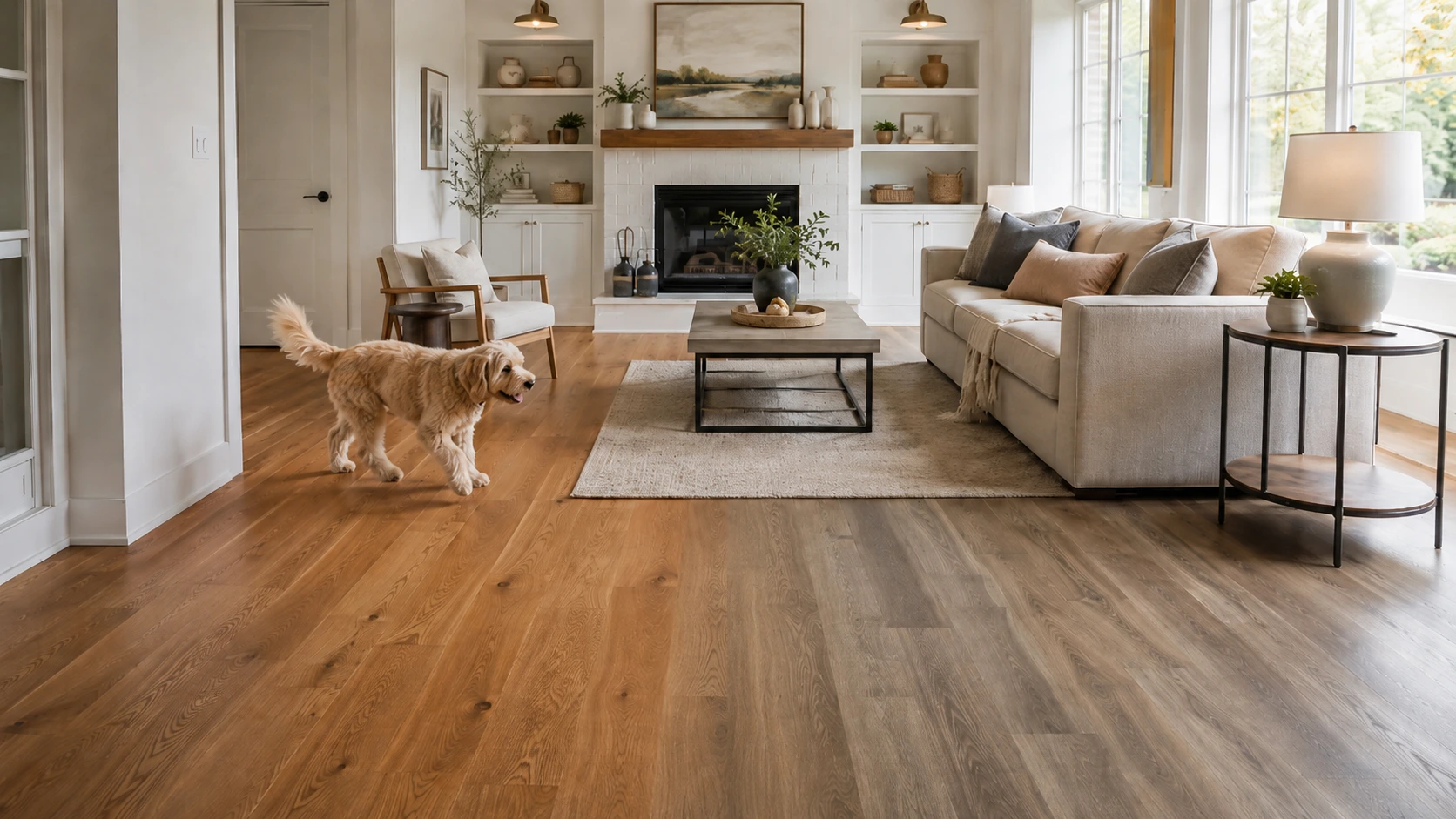
Choosing between hardwood and luxury vinyl plank is easier when you stop asking which material is “best” and start asking what each room actually needs. For Maryland homeowners, that means balancing authentic material, moisture exposure, pets, maintenance, budget, subfloor conditions, and how long you expect the floor to stay in the home. A hardwood vs luxury vinyl plank comparison should therefore be a decision guide, not a beauty contest.
Hardwood brings the depth, variation, and renewal potential of real wood. Luxury vinyl plank, often shortened to LVP, brings a resilient manufactured surface, broad wood-look design choices, and many products built for easier care and stronger moisture performance. Both can look excellent in the right setting. Problems usually start when a material is chosen for its appearance without checking the room, substrate, installation system, and household habits.
This Carpet Palace guide takes a room-by-room approach. Instead of forcing one material through every space, it shows where hardwood tends to make the strongest architectural statement, where LVP can reduce day-to-day stress, and when a coordinated mix of the two may make more sense for a Maryland or DMV home.
|
BOTTOM LINE BEFORE YOU READ The best floor is not the material that wins the most categories. It is the floor that fits the room, the household, the substrate, the design and the length of time you expect to live with it. |
| Priority | Hardwood tends to lead when... | LVP tends to lead when... |
|---|---|---|
| Material experience | You want real grain, natural variation and a permanent architectural surface. | You want a convincing wood look with predictable color and resilient construction. |
| Moisture | The room is dry, conditioned and appropriate for the exact wood product. | Spills, wet shoes, slab conditions or below-grade use are bigger concerns. |
| Long-term renewal | Recoating, refinishing or future stain changes matter to you. | You prefer a replace-when-worn model with less long-term maintenance. |
| Initial budget | You are comfortable investing more in product, prep and installation. | Lower starting cost is a major part of the project decision. |
| Pets / active family | You accept some patina and choose species/finish with wear in mind. | You want a lower-stress surface for routine spills, scuffs and traffic. |
| Best use | Main living areas, bedrooms, stairs and design-led dry spaces. | Basements, mudrooms, laundry zones and other practical family areas. |
|
QUICK ANSWER Hardwood is usually strongest in dry living spaces where authentic wood, long-term character and future renewal matter most. Luxury vinyl plank is often stronger in basements, mudrooms and moisture-prone zones where easier care and water resistance matter more. Many Maryland homes work best with both materials, coordinated by undertone, plank scale and transition details. |
Hardwood vs Luxury Vinyl Plank: Start With the Room, Not the Sample
A sample board can tell you color and texture, but it cannot tell you whether the floor is right for a basement slab, a busy mudroom, a formal living room, or a kitchen where water exposure is a realistic possibility. Begin with the room’s conditions first: grade level, subfloor, expected moisture, traffic, sunlight, pets, and how connected the room is to the rest of the house.
Then decide what role the floor should play. In a main living level, hardwood can act like a permanent architectural material that connects entries, halls, living rooms, and dining rooms. In a lower level or utility zone, LVP can provide a practical wood look where moisture resistance and easy cleanup matter more than refinishing potential.
This is why many successful whole-home projects do not have one winner. They use a controlled material palette: real wood where authenticity and long-term character matter most, and resilient flooring where the room asks for more forgiving performance.
What You Are Actually Buying: Real Wood Surface vs. Resilient Construction
Hardwood flooring includes solid wood and engineered wood. The National Wood Flooring Association (NWFA) defines real wood flooring by its top-most wearable surface: solid hardwood is one piece of wood from top to bottom, while engineered hardwood uses a real wood wear layer over a layered construction. Both are real wood at the surface, but their construction affects movement, approved locations, installation methods, and future sanding potential.
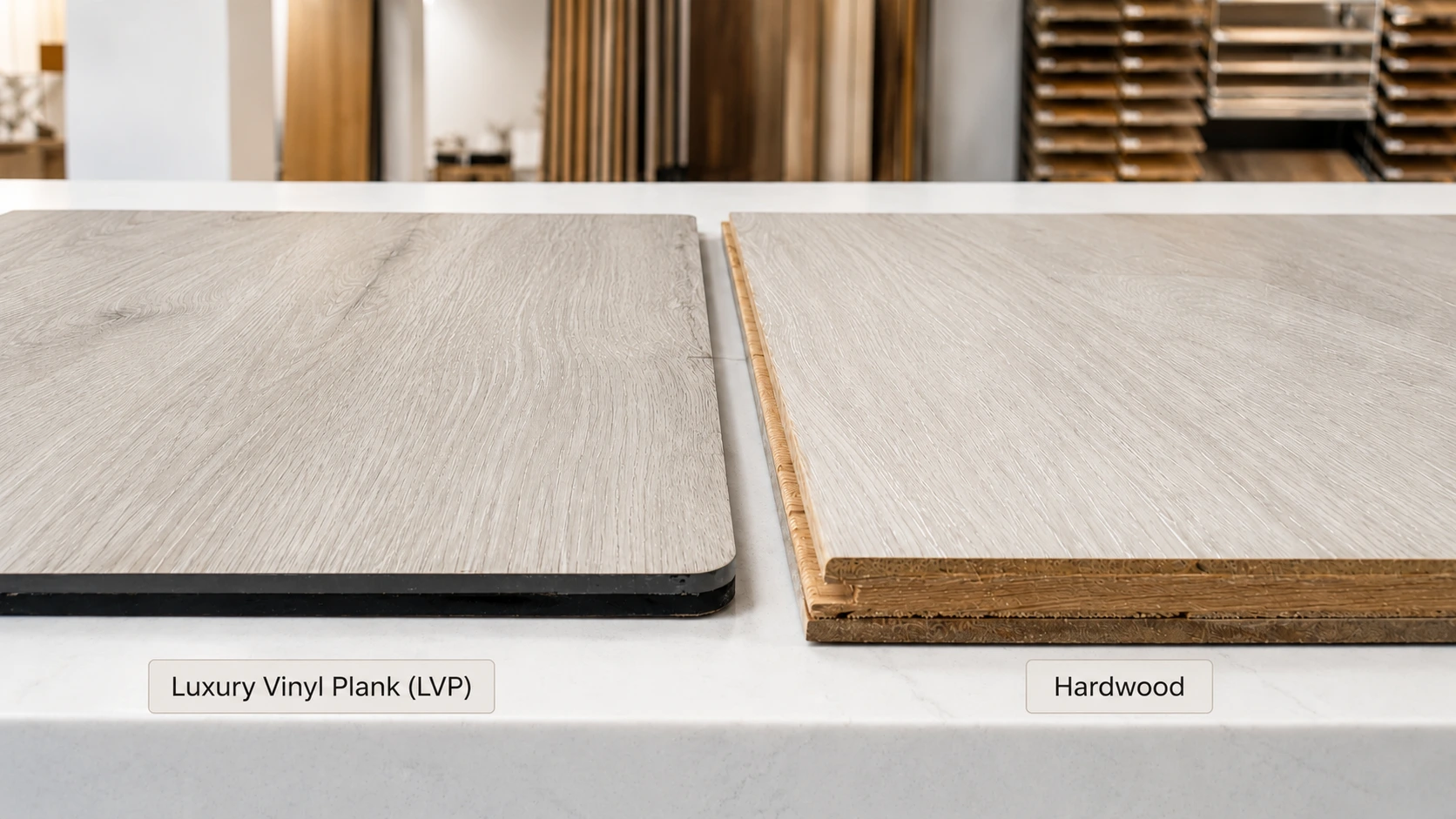
Luxury vinyl plank is a resilient flooring product rather than wood. Modern LVP can use high-definition visuals, embossing, beveled edges, matte finishes, and longer planks to create a convincing wood appearance. The Resilient Floor Covering Institute (RFCI) notes that flexible LVP/LVT is available in multiple installation systems and a broad range of performance and price levels.
The practical distinction is simple: hardwood gives you a natural material that can change subtly with age and may be renewed; LVP gives you a manufactured wear surface designed to deliver a predictable look and practical performance. Neither description alone tells you quality. Compare the exact product, wear layer or wood wear surface, edge construction, warranty, approved installation method, and sample size before deciding.
Maryland Moisture, Basements and Seasonal Conditions
Maryland homes experience humid summers, heated winters, wet entry conditions, and a mix of wood and concrete subfloors. Real wood responds to moisture in the surrounding environment, so HVAC stability, subfloor moisture, acclimation or conditioning requirements, and manufacturer instructions matter. The U.S. EPA recommends controlling indoor moisture and generally keeping relative humidity in a healthy range, while flooring manufacturers set their own product-specific limits.
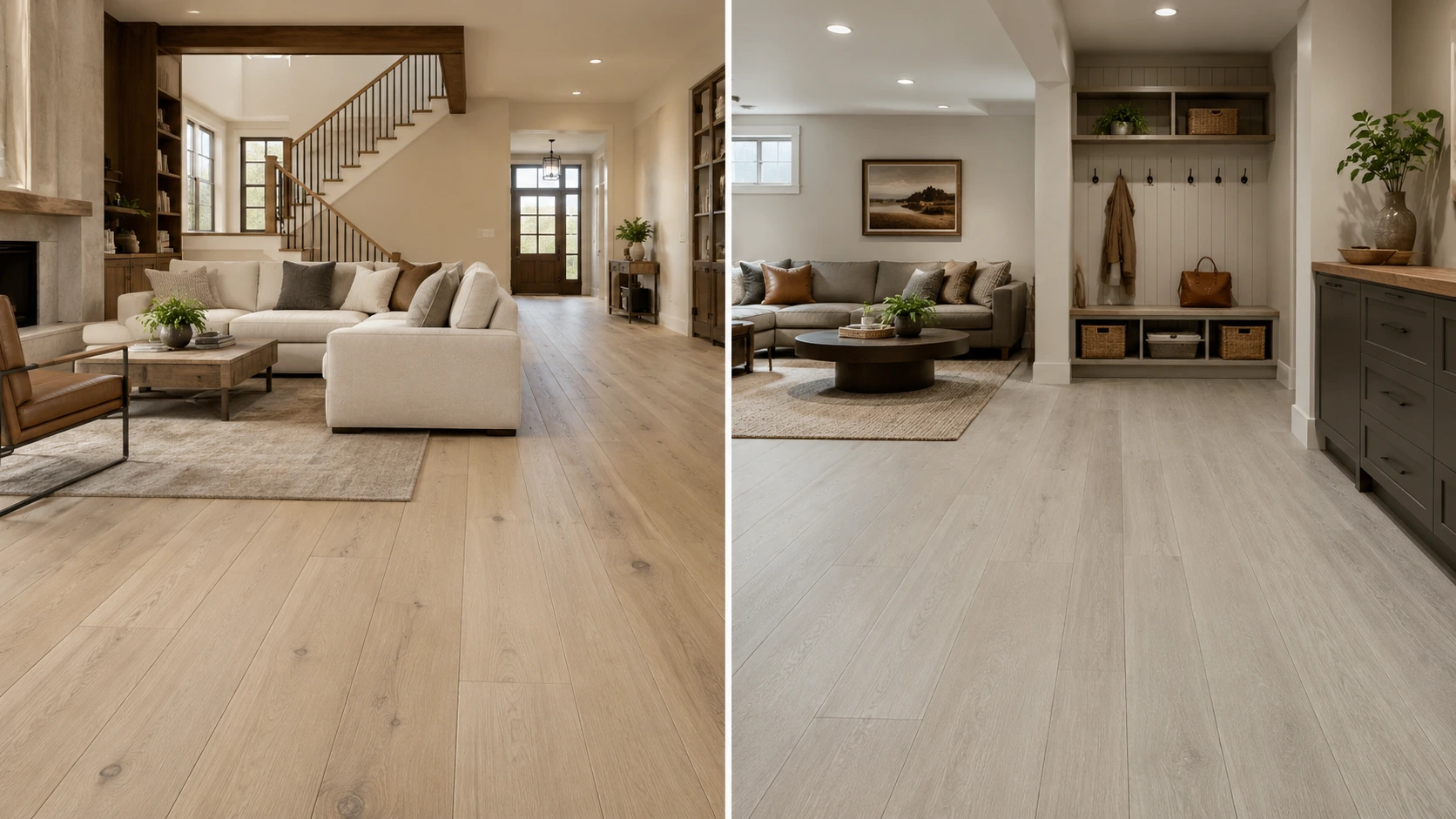
Solid hardwood is generally intended for on- or above-grade applications. Engineered hardwood can open more possibilities because its layered construction usually moves less with moisture changes, and some products are approved for concrete or below-grade installations. That still does not make engineered hardwood waterproof. The specific product and site conditions must be checked.
LVP is often the first material homeowners investigate for basements, laundry areas, and other spaces where moisture risk is higher. Many current products offer strong water resistance, and some are marketed or warranted as waterproof. Always read the exact warranty: a waterproof plank does not solve a wet slab, plumbing leak, mold source, or water trapped below the floor. Moisture control and proper substrate preparation still matter.
Room-by-Room: Where Each Material Makes the Most Sense
| Room | Typical first choice to investigate | Why |
|---|---|---|
| Living / dining | Hardwood | Authentic material, long sightlines, stairs and architectural continuity. |
| Kitchen | Hardwood or LVP | Hardwood supports continuity; LVP reduces moisture and cleanup stress. |
| Basement | LVP | Below-grade conditions and concrete slabs often make resilient flooring practical. |
| Bedrooms | Hardwood or LVP | Low moisture; decide by continuity, maintenance and design preference. |
| Home office | Hardwood or LVP | Both work; consider chair traffic, acoustics, glare and whole-home palette. |
| Entry / mudroom | LVP often leads | Wet shoes, grit and pet traffic raise moisture and wear concerns. |
| Laundry | LVP often leads | Appliance and spill risk make product-specific water performance important. |
| Stairs | Hardwood often leads | Permanent architectural detail and strong coordination with custom runners. |
Living Rooms and Dining Rooms
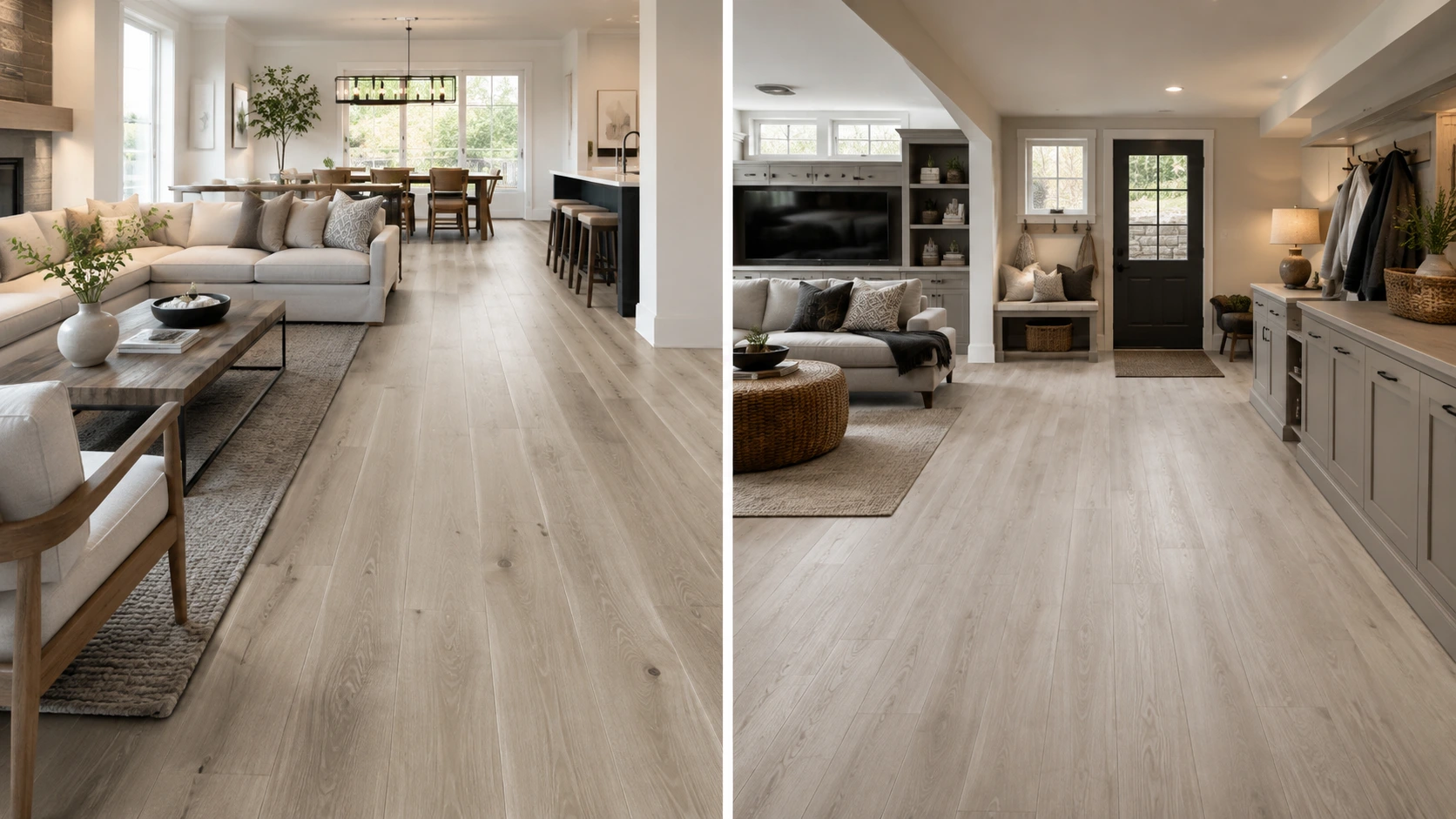
In dry main-level living and dining spaces, hardwood often has the strongest design argument. Natural board variation, real grain, changing light, and the ability to coordinate stairs or custom details can give the floor a sense of permanence that is difficult to imitate. In higher-end or design-led interiors, that authenticity can matter as much as durability.
LVP can still be the smarter choice when the household prioritizes easier cleanup, pet activity, a tighter starting budget, or one continuous resilient surface through several rooms. Premium LVP can look highly convincing, especially when the collection has varied plank visuals and restrained texture.
If you are comparing the two for an open plan, look from twenty feet away as well as close up. Repeated print patterns, overly uniform knots, surface sheen, bevels, and board variation become easier to judge at room scale.
Kitchens and Breakfast Areas
Kitchens create one of the most balanced hardwood-or-LVP decisions. Hardwood can look beautiful when it continues from an adjacent living or dining area and can make the entire main level feel intentional. The tradeoff is that leaks and standing water need prompt attention, and appliance or plumbing failures are real risks.
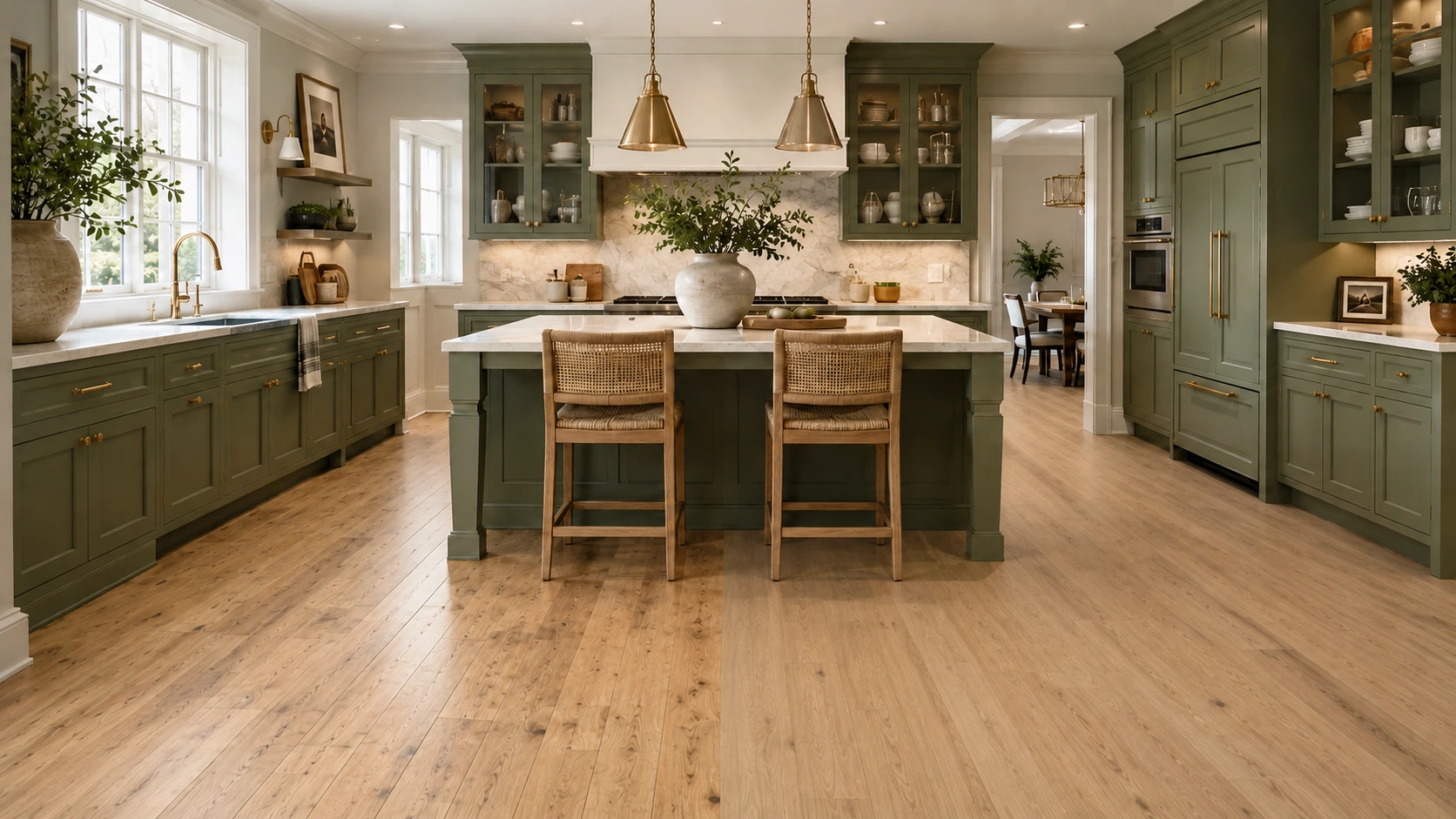
LVP reduces some of that anxiety because many products are designed for stronger moisture performance and simple cleanup. It can be a very practical choice for family kitchens, especially when pets, children, cooking traffic, and frequent spills are part of daily life.
The design challenge is transition. If hardwood ends at the kitchen, avoid choosing an LVP that almost matches but is visibly off in undertone. Either coordinate very carefully or make the transition deliberate with a complementary tone rather than an accidental near-match.
Basements and Lower Levels
For a finished basement, the subfloor often decides the conversation before style does. Concrete slabs can transmit moisture, and lower levels may experience different humidity patterns from the main floor. LVP is frequently a practical first choice because many products are approved for below-grade use and can be installed with systems designed for resilient flooring.
Engineered hardwood may be appropriate in some conditioned basements when the manufacturer approves the application and the slab, moisture testing, adhesive or underlayment, and environmental conditions all meet requirements. Solid hardwood is generally not the first choice below grade.
If the basement includes a bar, exercise zone, exterior walkout, or utility area, think about the worst realistic day in the room, not just the best-looking sample. The floor should suit how the space will actually be used.
Bedrooms and Home Offices
Bedrooms are forgiving because water exposure is usually low. Hardwood works beautifully when you want continuity from a hallway and the option to layer area rugs for softness. LVP works well when you prefer simpler maintenance or want the same easy-care surface across several bedrooms.
For a home office, consider rolling chair traffic, acoustics, and glare as well as appearance. A matte hardwood finish can feel tailored and architectural; a quality LVP can offer a practical surface for daily use. In either case, use appropriate chair protection and follow the manufacturer’s care guidance.
Entries, Mudrooms and Laundry Areas
These are the rooms where practical performance often matters more than material romance. Wet shoes, grit, pet paws, umbrellas, cleaning supplies, and appliance risk all raise the stakes. LVP commonly has the edge when the exact product is approved for the space.
Hardwood can still work in a formal entry where moisture is controlled and walk-off mats protect the floor, but the maintenance expectations should be realistic. For laundry areas, verify water exposure, appliance requirements, and manufacturer approval rather than assuming any wood or vinyl product is automatically suitable.
Kids, Pets and Everyday Wear: Compare the Failure Mode
“Pet-friendly” or “durable” is too vague to choose a floor. Ask what kind of wear worries you. Hardwood can scratch or dent, but species, texture, finish, sheen, color, and household habits change how noticeable that wear becomes. The NWFA notes that species hardness is only one part of durability; finish and construction also matter.
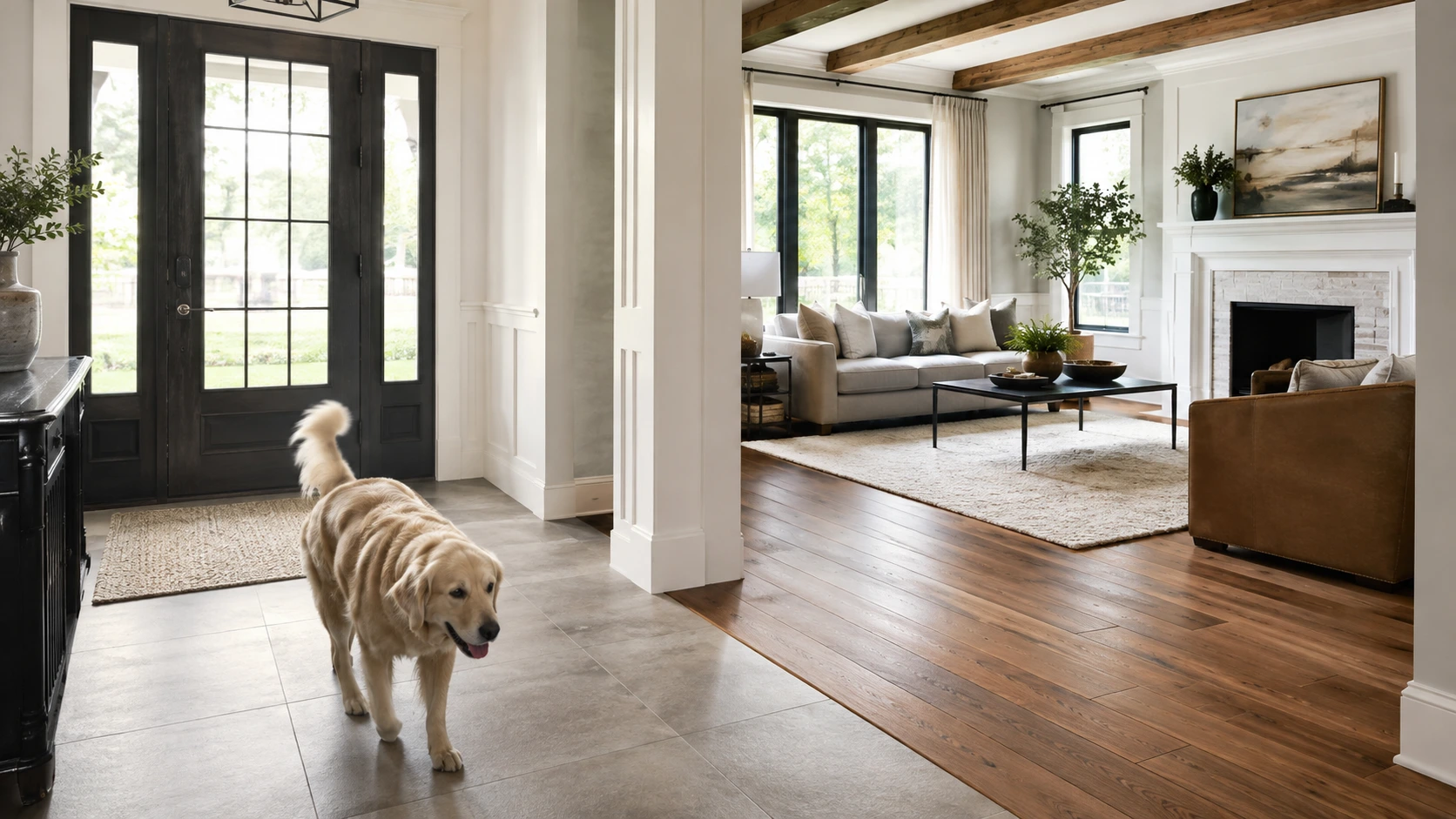
LVP can be very forgiving with routine spills, scuffs, and active traffic, but the protective wear surface is not indestructible. Deep gouges, damaged click joints, or heat-related damage cannot be sanded away. If a plank is replaceable, the success of the repair depends on the installation system and whether matching material is still available.
The key long-term difference is the recovery path. Many hardwood floors can be recoated, and some can be sanded and refinished when deeper renewal is needed. LVP is not refinishable; when the wear surface is exhausted, replacement is the normal route. For a household planning to stay for decades, that distinction deserves as much attention as scratch resistance on day one.
Cost: Compare Ownership, Not Just the First Invoice
LVP usually starts with a lower project cost than hardwood, and RFCI identifies broad price ranges and potentially lower installation costs among the advantages of resilient flooring. Hardwood typically carries a higher material and installation investment, especially when the project includes custom stairs, borders, site finishing, complex subfloor work, or premium wide-plank products.
The first invoice is only one part of the decision. Ask how long you expect to keep the floor, whether you are likely to remodel again, what kind of damage is realistic, and whether renewal matters to you. A homeowner planning a major style change in ten years may value LVP’s lower starting cost differently from someone who wants one floor to remain for several decades.
Compare quotes on the same scope. Removal, disposal, subfloor leveling, moisture testing, underlayment or adhesive, transitions, stair parts, trim, furniture moving, delivery, and labor can change the total more than a small difference in material price. A complete estimate makes the comparison meaningful.
Design Continuity: The Best Whole-Home Plan May Use Both
Mixing hardwood and LVP does not have to make a house feel chopped up. The goal is visual continuity, not identical materials. Coordinate undertones, plank scale, sheen, and transition locations so each floor feels intentional in its room.
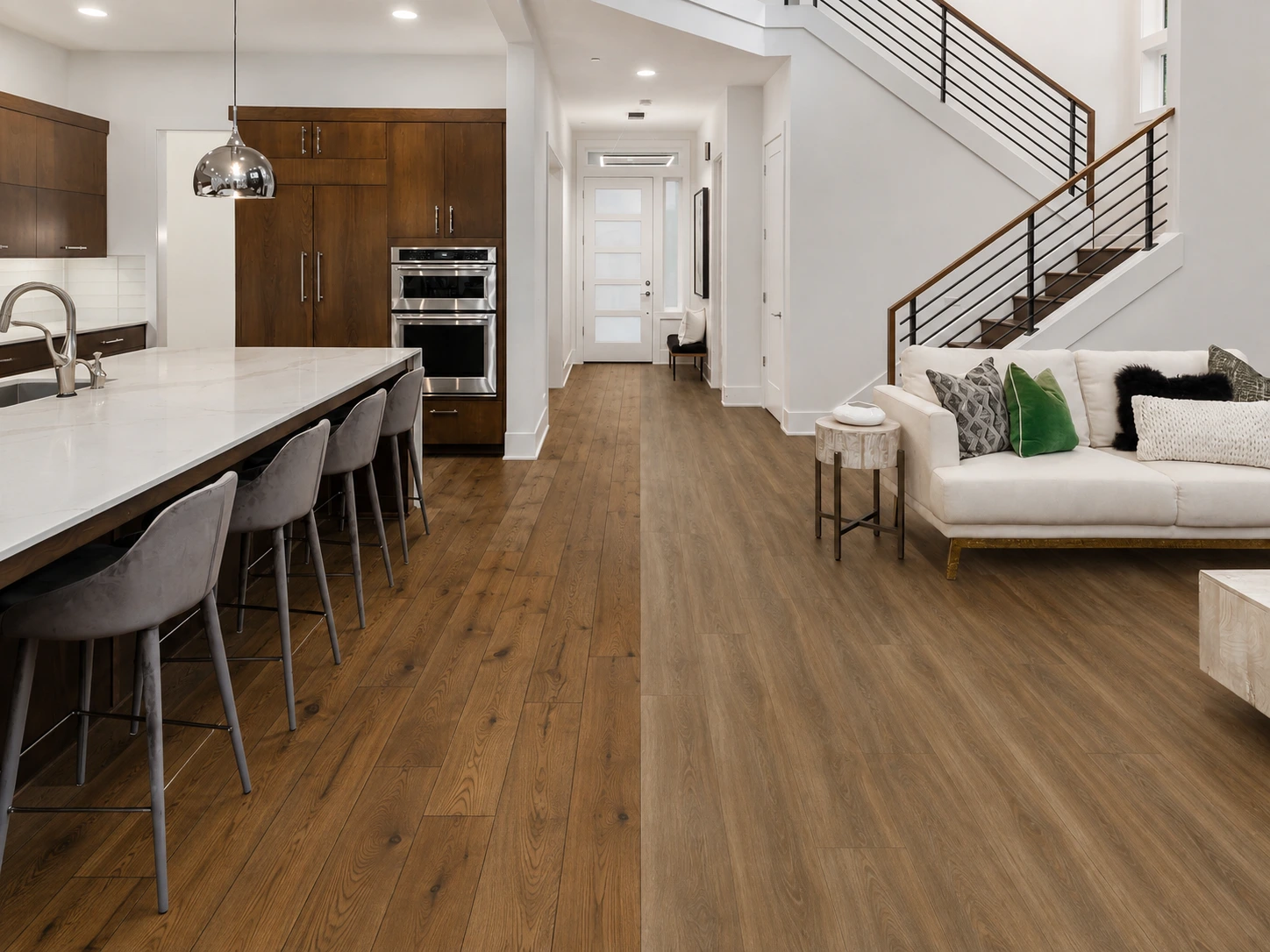
A common strategy is hardwood through the main living level and bedrooms, with LVP in the basement, mudroom, or other moisture-prone zones. Another is hardwood in formal spaces and premium resilient flooring in high-use family areas. The best transition is usually at a natural architectural break such as a doorway, stair landing, or level change.
Be careful with “almost the same” wood looks. When real hardwood and LVP sit directly beside each other, tiny differences in grain repeat, color temperature, plank width, and sheen can become more obvious. Sometimes a deliberately complementary tone looks more sophisticated than a near-match.
Resale, Style Changes and Long-Term Value
Flooring value is not only about what a buyer might pay someday. It is also about how many design cycles the floor can survive without becoming a replacement project. Real hardwood has an advantage here because many floors can be recoated, sanded, restained, or refinished when the surface and construction allow it. That gives homeowners a way to adapt the floor as wall colors, furniture, and interior styles change.
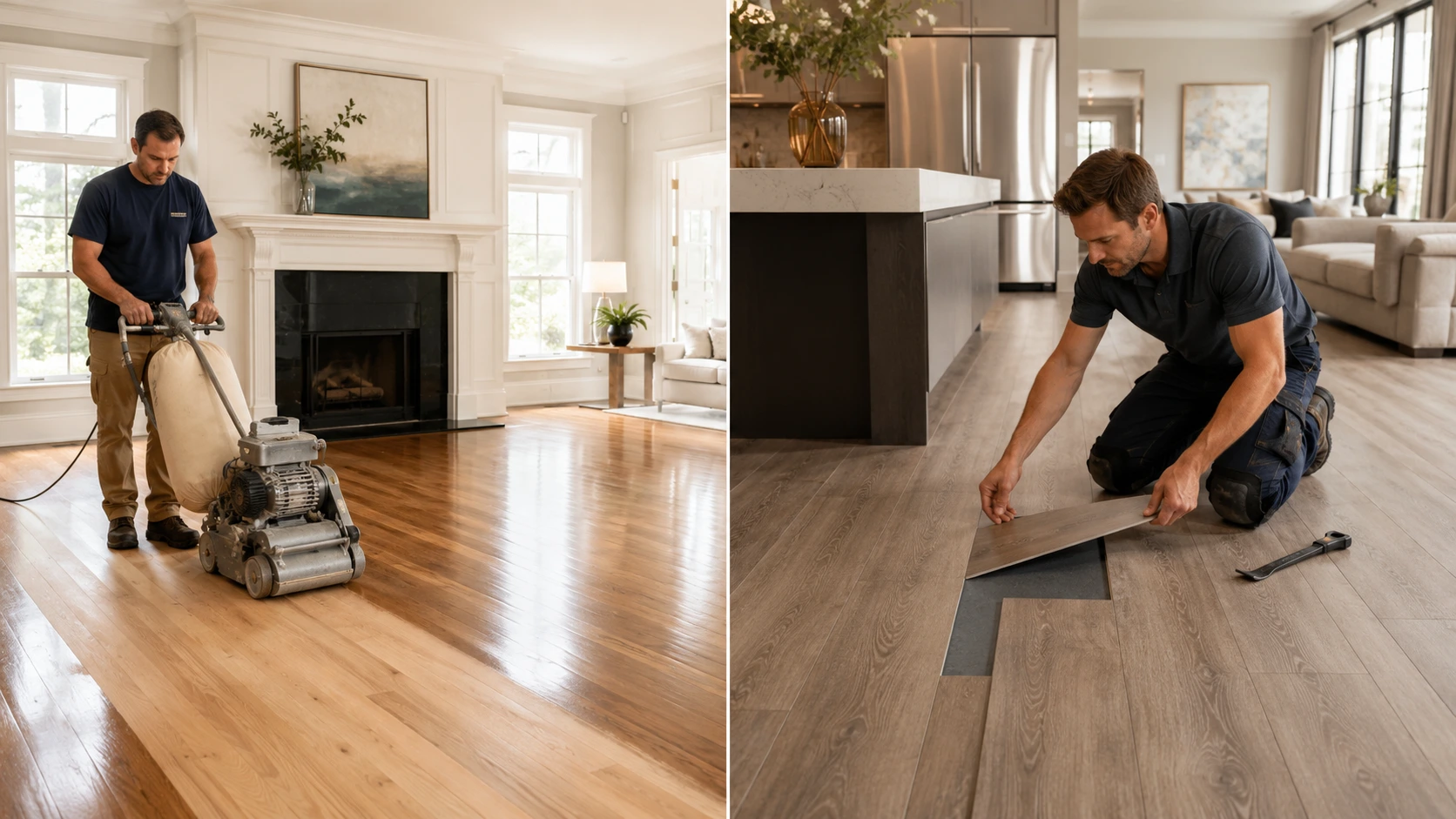
LVP can be an excellent value when the priority is practical performance and a lower starting investment, but it does not have the same renewal pathway. When the wear surface or visual is no longer acceptable, replacement is usually the next step. The National Association of REALTORS has reported strong consumer interest in wood flooring in remodeling research, but no current flooring project should be sold with a guaranteed resale percentage. Think of buyer recognition as one factor, not a promise.
Installation Quality Can Change the Result More Than the Material
A premium floor over an unprepared substrate is still a poor flooring system. Before ordering, the installer should evaluate flatness, moisture, existing floor height, transitions, door clearances, stairs, and any manufacturer-specific requirements. Concrete and wood subfloors may call for different testing and preparation.
LVP may be installed as glue-down, floating/click, or loose-lay depending on the product. Hardwood installation methods vary by solid or engineered construction and may include nail-down, glue-down, or floating systems where approved. The method is not a preference to improvise; it must match the product, substrate, room, and warranty.
For condos or multi-level buildings, sound-control requirements can also affect underlayment and product selection. For stairs, inspect the available nosings and transitions before committing to a floor so the finished project looks intentional rather than improvised at the end.
A Simple Decision Filter Before You Order
Choose hardwood when you want real wood character, a long-term architectural foundation, the possibility of future recoating or refinishing, and the room is dry and appropriate for the selected product.
Choose LVP when moisture performance, easy routine care, lower initial investment, basement use, or a highly active household matters more than having a real wood surface.
Choose a mixed plan when different levels of the home have different moisture, substrate, traffic, or design needs. The strongest decision is the one that respects the actual room instead of forcing one material to “win” everywhere.
- Is the room above grade, on a concrete slab, or below grade?
- How likely are standing water, wet shoes, pet accidents, or appliance leaks?
- Do you want a real wood surface or is a convincing wood look enough?
- Would future recoating, sanding, or color change matter to you?
- Are pets, children, rentals, or heavy daily traffic major considerations?
- How long do you realistically expect to keep this floor?
- Does the floor need to coordinate with stairs, cabinets, stone, rugs, or an adjacent material?
- What installation system is approved for the actual product and substrate?
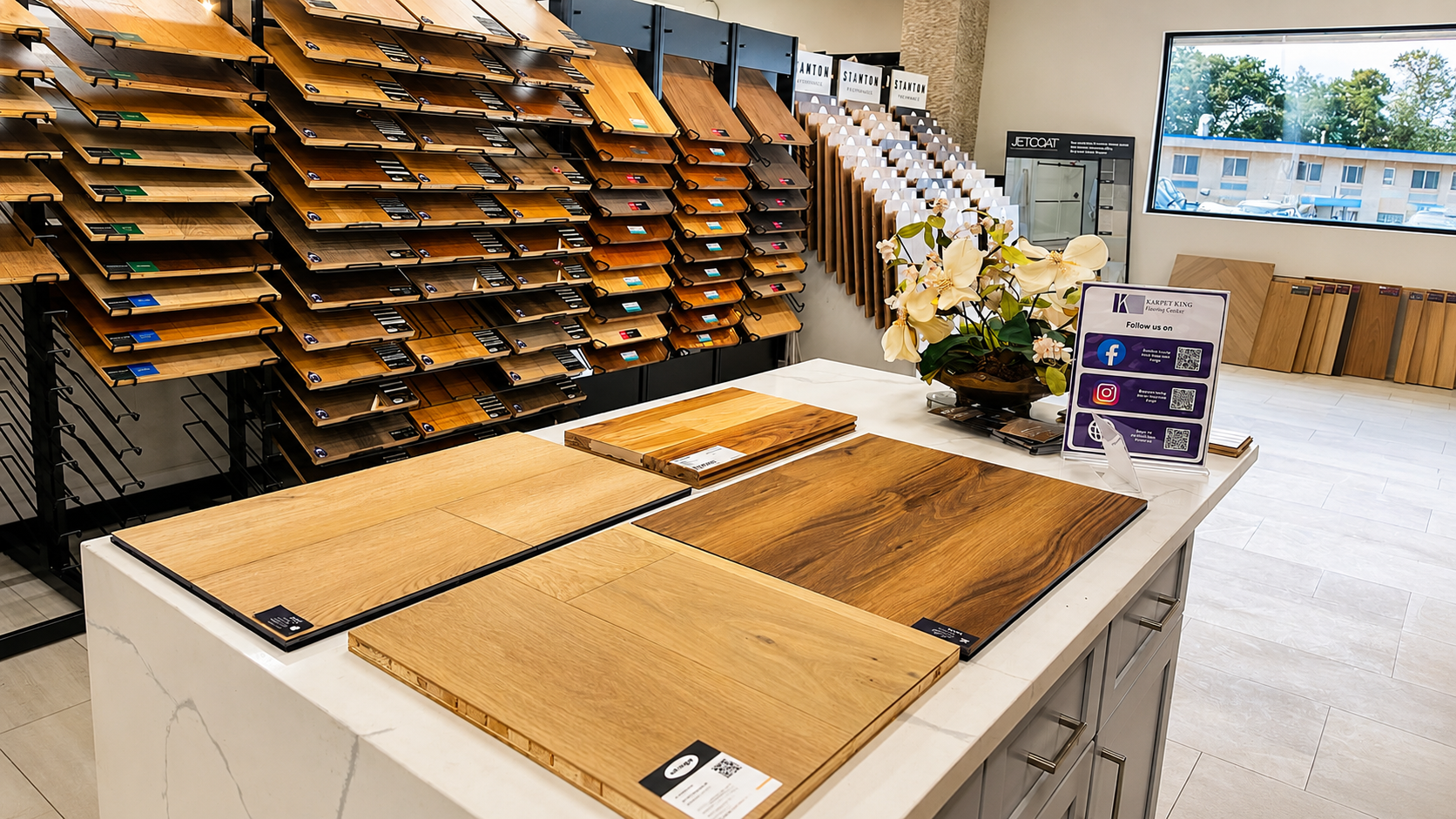
Photos online can make hardwood and luxury vinyl plank look much more similar than they feel in person. Compare several full-size samples together. Look for natural board variation, visual repeats, texture, bevels, sheen, edge detail, and how the colors react beside your cabinets, paint, stone, and rugs.
At Carpet Palace in Rockville, homeowners can compare hardwood flooring and resilient/LVP options side by side, review installation conditions, and coordinate flooring with the rest of the home. Bring room photos, approximate measurements, and any finish samples that need to work with the new floor.
The goal is not to leave the showroom with the “winner.” It is to leave with the floor that makes sense for your rooms, your household, and the length of time you expect to live with the decision. That is the most useful way to approach hardwood vs luxury vinyl plank for a Maryland home.
Frequently Asked Questions
Is hardwood better than luxury vinyl plank?
In a hardwood vs luxury vinyl plank decision, neither material is better in every room. Hardwood is often stronger for authentic material, long-term renewal and dry living spaces. LVP is often stronger for moisture-prone rooms, easier routine care and lower initial cost. The best answer depends on the room and the exact products.
Which is better for a Maryland basement?
LVP is usually the practical first material to investigate because many products are approved for below-grade use. Some engineered hardwood products may work in conditioned basements when the manufacturer approves the application and moisture conditions are acceptable.
Can LVP be waterproof?
Many LVP products are marketed or warranted as waterproof, but the claim is product-specific. Waterproof planks do not eliminate subfloor moisture, leaks, perimeter details or water trapped below the flooring, so installation and moisture control still matter.
Can engineered hardwood be refinished?
Sometimes. Refinishing depends on the thickness of the real wood wear layer, the floor’s condition, flatness, previous sanding and manufacturer guidance. Solid hardwood generally offers more sanding potential because it contains more solid wood above the tongue.
Which floor is better with dogs?
LVP is often lower-stress for spills, scuffs and active pets. Hardwood can also perform well when species, finish, texture, color, mats and nail care are chosen with the household in mind. No floor is completely scratch-proof.
Which looks more expensive, hardwood or LVP?
Real hardwood usually has a more authentic material character because every board is wood and natural variation does not repeat like a printed visual. High-quality LVP can still look very convincing, especially when plank visuals, texture, bevels and sheen are well executed.
Does hardwood add more resale value?
Hardwood has strong buyer recognition, but no flooring material guarantees a fixed resale return. Property type, neighborhood, condition, installation quality and the rest of the renovation all matter. Treat resale claims as context, not a promised percentage.
Is LVP easier to maintain than hardwood?
Usually, yes. LVP does not require recoating or refinishing. Hardwood day-to-day care can also be simple, but it has a longer-term maintenance pathway that may include a maintenance coat or refinishing when appropriate.
Can I use hardwood on the main level and LVP in the basement?
Yes. That is often a sensible whole-home strategy. Keep the undertones, plank scale and transition details coordinated so the change in material feels intentional rather than accidental.
What should I bring to the showroom when comparing floors?
Bring room photos, approximate measurements, paint colors, cabinet or countertop samples, rug or fabric swatches, and information about pets, children, moisture concerns and the subfloor if you know it. Compare multiple boards in neutral and natural light.