
Accent Tile That Adds Character Without Overwhelming Your Room
The tile you love in the showroom can look very different once it sits beside a countertop, cabinet door and floor. A rich glaze, a geometric pattern or a textured mosaic may be beautiful on its own, yet feel unsettled when several nearby finishes ask for equal attention.
Good accent tile ideas begin with the whole room. Decide what already brings interest to the space, choose the tile’s role, and give its edges a clear stopping point. You can enjoy colour and decorative detail while keeping your kitchen or bathroom comfortable to look at every day.
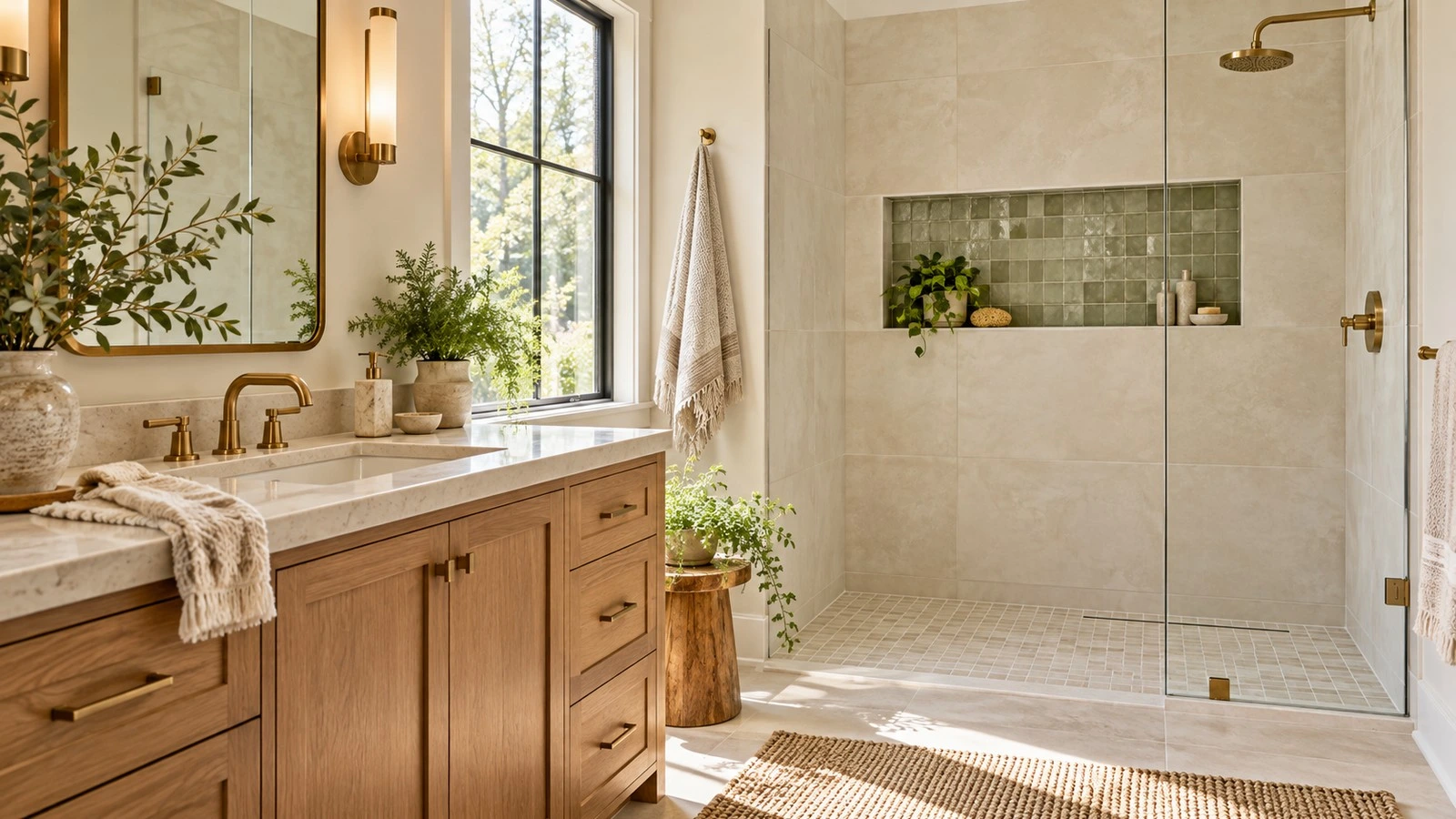
Read the room before choosing the accent
Start with the finishes that will stay. In a kitchen, look at the cabinet colour, countertop veining, flooring and appliances. In a bathroom, include the vanity, main wall tile, mirror and lighting. Photograph the room from the entrance to see the surfaces together rather than judging each one separately.
Notice where the strongest detail already appears. A heavily veined countertop may need a backsplash with a quieter pattern. Plain cabinetry and a pale countertop can leave room for a more expressive tile. The aim is to decide where your next layer of interest will be most useful.
This also helps with a partial renovation. If you are keeping an existing floor or vanity, choose the accent alongside those materials instead of building a palette around a tile that cannot relate to them.
Let one feature carry the decoration
Give your favourite tile a specific job. It might frame the cooking area, bring detail to a shower niche or create a backdrop behind a bathroom basin. A defined feature is easier to balance than decorative tile scattered across several unrelated surfaces.
You do not need to repeat an accent on every wall to make it feel connected. Sometimes a small area is enough. A narrow niche with a textured interior can create interest even when the shower walls use a simple tile throughout.
Consider the view from the doorway. If the decorative floor, wall behind the vanity and shower feature all appear together, decide which should lead. You can simplify another surface through its colour, layout or finish rather than removing all its character.
Plan the edges as carefully as the pattern
Before ordering, identify where the feature will begin and end. A backsplash behind the range can align with the width of the hood or cooking area. A niche provides its own architectural boundary. A vanity feature can finish at a deliberate corner or trim line.
Avoid letting an accent end midway along a wall without a reason. Awkward cuts or tiny strips at the perimeter can make a restrained pattern look restless. Ask your installer to review the layout, edge treatment and cuts before the design is final.
There is no universal percentage of a room that should be covered in accent tile. The visual effect depends on the tile, lighting and surfaces around it. Test the composition in your room rather than relying on a fixed decorating formula.
Choose a colour connection rather than an exact match
Look for a link between the accent and another finish. That connection might be the warmth of an oak cabinet, a soft colour in the countertop or an undertone in the surrounding wall tile. The materials can relate without being identical.
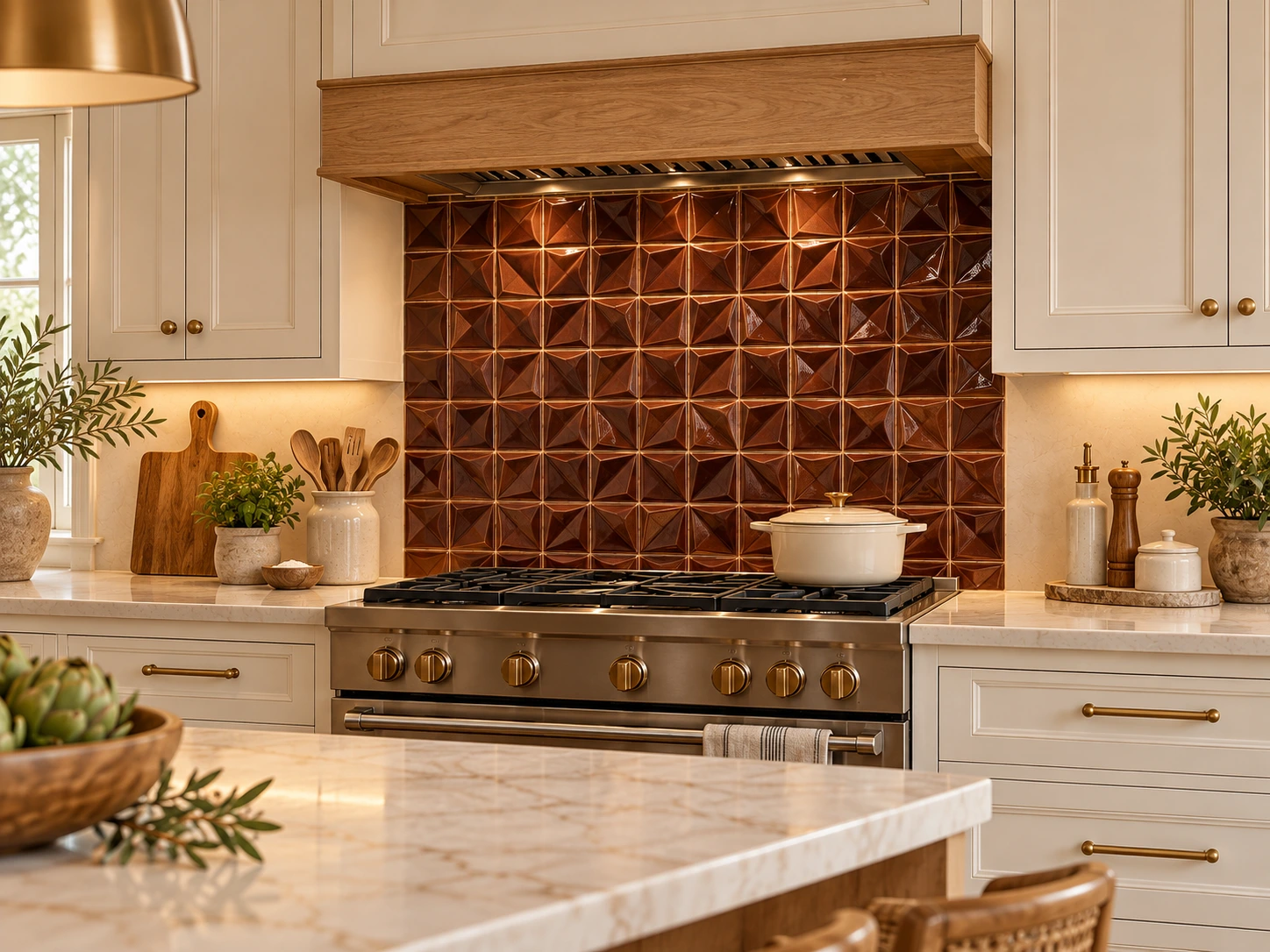
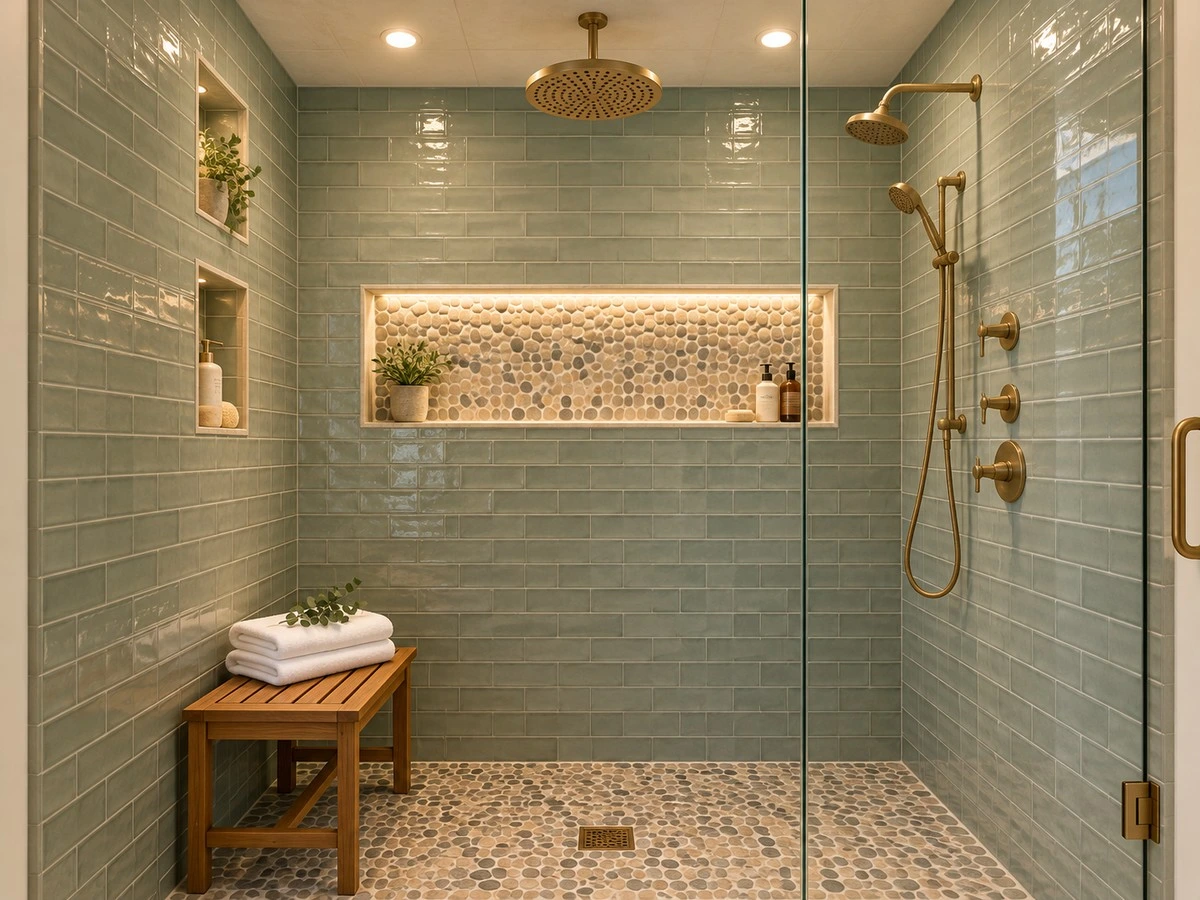
For example, copper-brown dimensional ceramic tile can look inviting beside warm cream cabinetry and natural wood. Keep the countertop relatively quiet so the sculpted surface can catch the light. In a bathroom, sage wall tile and a pale pebble niche can share a gentle palette while offering different textures.
Check samples under the lighting you will actually use. Warm under-cabinet lighting can change how a glazed backsplash appears; daylight may reveal a cool undertone that you missed in a showroom. Compare the accent with the neighbouring finishes at more than one time of day.
If the countertop is still undecided, explore our countertop options and compare a sample directly beside your proposed accent tile.
Use texture when another pattern would feel crowded
Colour is only one way to create a feature. Uneven glaze, shallow relief, gentle stone variation or a change in tile direction can add detail without introducing another bold motif.
If the floor already has a strong pattern, a solid-colour backsplash with a textured surface may be a better partner than another busy print. When combining two patterns, vary their scale and retain a shared colour so the eye can distinguish them easily.
View the samples from across the room as well as up close. A small pattern may merge into a soft texture from a distance, while high contrast can remain noticeable. This is why sample size and placement matter more than a cropped online product photo.
Treat grout as part of the tile selection
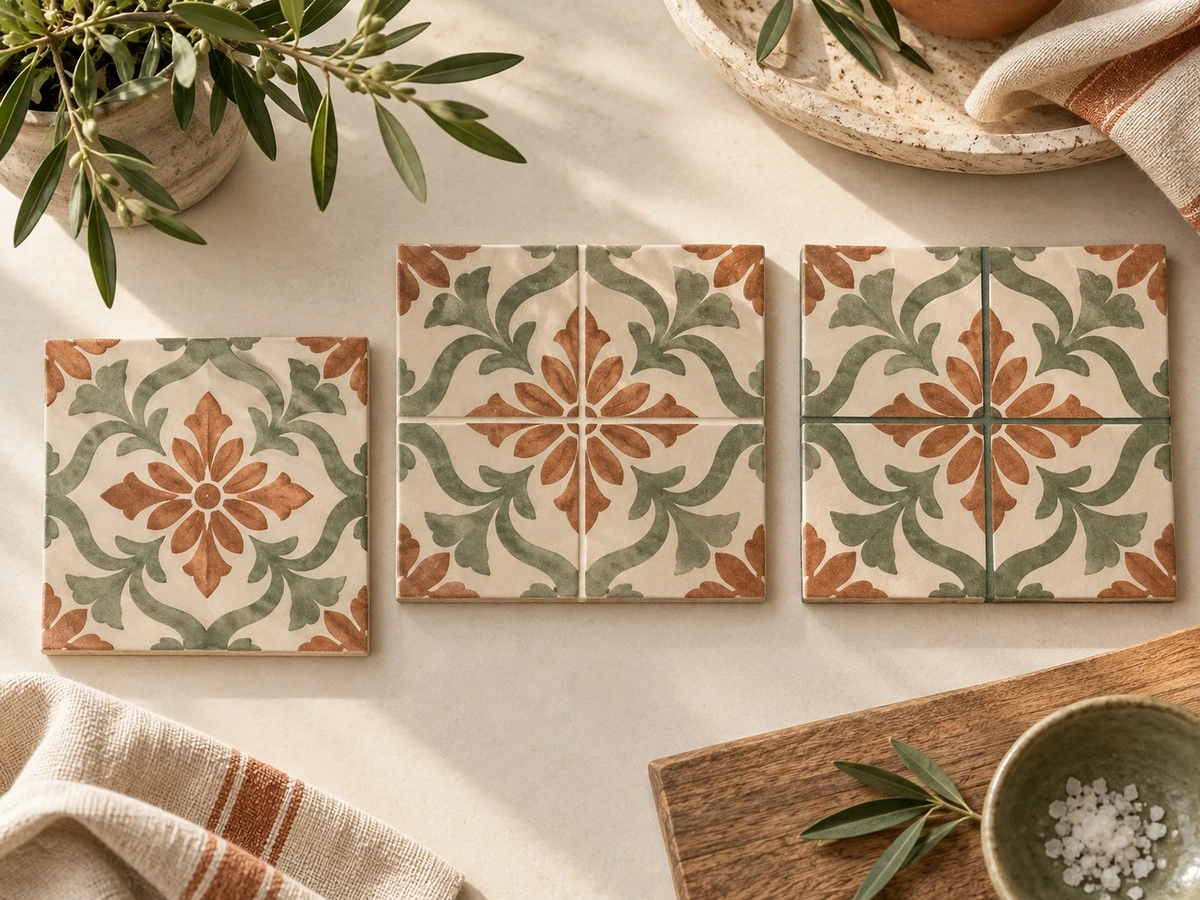
Grout can change the emphasis of an installation. A colour close to the tile’s background can soften the grid. A deeper or contrasting shade can outline individual pieces and make the layout more graphic.
With patterned tile, compare the grout to both the background and the coloured detail. Ivory grout may allow a cream-based design to flow more gently across the surface. Sage grout may echo the pattern while making the joints more visible. Neither approach is automatically better; choose the effect that works with your room.
A small grouted test board is more useful than imagining the result from a colour swatch alone. Use the intended joint width in the test. Do not choose an unusually narrow joint solely for appearance: follow the tile manufacturer’s guidance and ask your installer to confirm the appropriate spacing.
Give kitchens and showers their own practical checks
Kitchen backsplash
Choose a surface you can reasonably maintain around cooking and food preparation. Strong relief adds depth but can require more care to clean than a flatter face. Confirm the product’s approved use and cleaning guidance, and coordinate the backsplash with outlets, hood details and countertop edges.
For material and design possibilities, browse Carpet Palace’s backsplash tile selection before narrowing your shortlist.
Shower niche
A niche is a useful place to introduce mosaic, colour or texture because the feature has a contained shape. Keep its size, shelf arrangement and contents in mind so the decorative surface remains visible after the shower is in use.
Confirm that the selected tile is appropriate for its exact wet-area application. A wall accent is not automatically suitable for a shower floor. The shower also needs correctly detailed waterproofing and drainage; tile and grout do not replace the waterproofing system. Discuss the complete installation with your tile professional.
Make a sample board before making the final decision
Set the accent tile next to the main tile, countertop, cabinet finish and grout. Arrange them in roughly the relationship they will have in the room. Then move the board to the intended location and take another photograph from the entrance.
- Does the accent have one clear purpose?
- Do the neighbouring materials support its colour and texture?
- Are the grout lines more noticeable than you want?
- Does the design still feel balanced in daylight and evening light?
- Have the layout, edges and product suitability been checked?
If the board feels crowded, adjust one element at a time. Try a quieter countertop sample, a closer grout colour or a smaller accent area. These changes can preserve the tile you love while making the overall design easier to live with.
Compare your tile palette at Carpet Palace
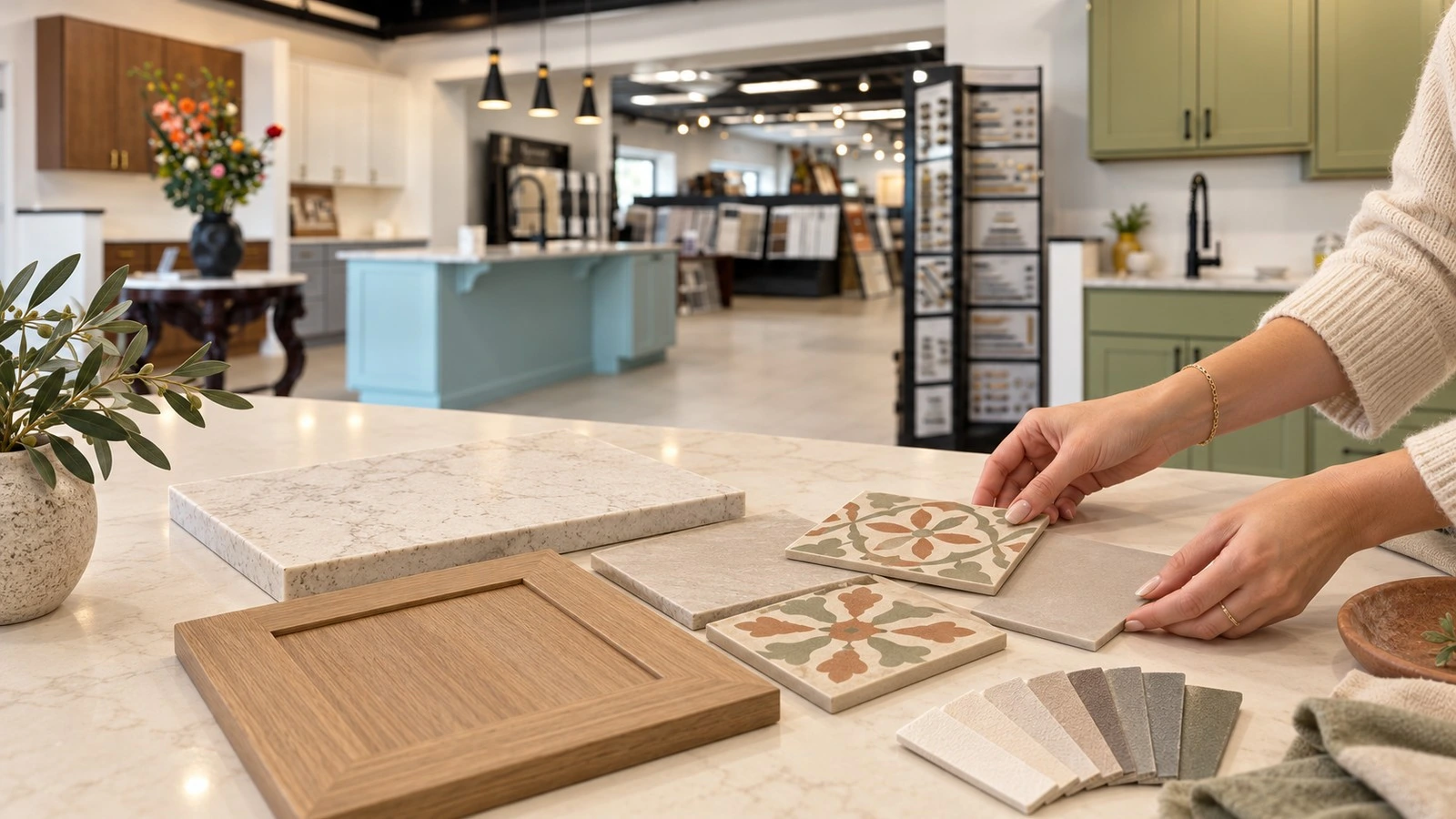
Ceramic tile is made from clay and other mineral materials that are formed, dried, and fired in a kiln. The finished tile may be glazed or unglazed and comes in many colors, patterns, sizes, and finishes. Because “ceramic” is an umbrella term, products sold under it can have different technical properties. A decorative ceramic wall tile and a ceramic floor tile are not automatically interchangeable.
For that reason, do not choose by the word ceramic alone. Check whether the manufacturer approves the exact product for floors, walls, wet areas, or exterior use. Product data—not a broad category label—should guide the decision.
Frequently Asked Questions
Can decorative tile work in a small bathroom?
Yes. A defined niche or vanity feature can introduce decorative tile in a small bathroom. Judge the pattern alongside the room’s other surfaces and from the doorway before deciding how much to use.
How do I pair a patterned backsplash with a countertop?
Compare physical samples and identify a shared colour or undertone. If the backsplash is the main feature, a countertop with restrained movement can help the composition feel calmer.
Do I need to use the same accent tile in several places?
No. One well-placed feature can be enough. You can connect it to the room through related colours, wood tones or finishes without repeating the tile everywhere.
Which grout colour makes patterned tile look less busy?
Grout close to the tile’s background often makes the joints less noticeable. Compare an actual grouted test board because the tile pattern, lighting and joint width all affect the result.
Can I use shower wall accent tile on the floor?
Only when the exact product and finish are approved and suitable for the floor application. Check the manufacturer’s guidance and have your installer confirm the complete shower-floor specification.